Lacquer, laminate or veneer? Choosing kitchen fronts
Fronts decide how a kitchen looks and how it ages. Every material has its strengths – there is no single “best” one. Here is what we tell our clients when they choose.
Laminate
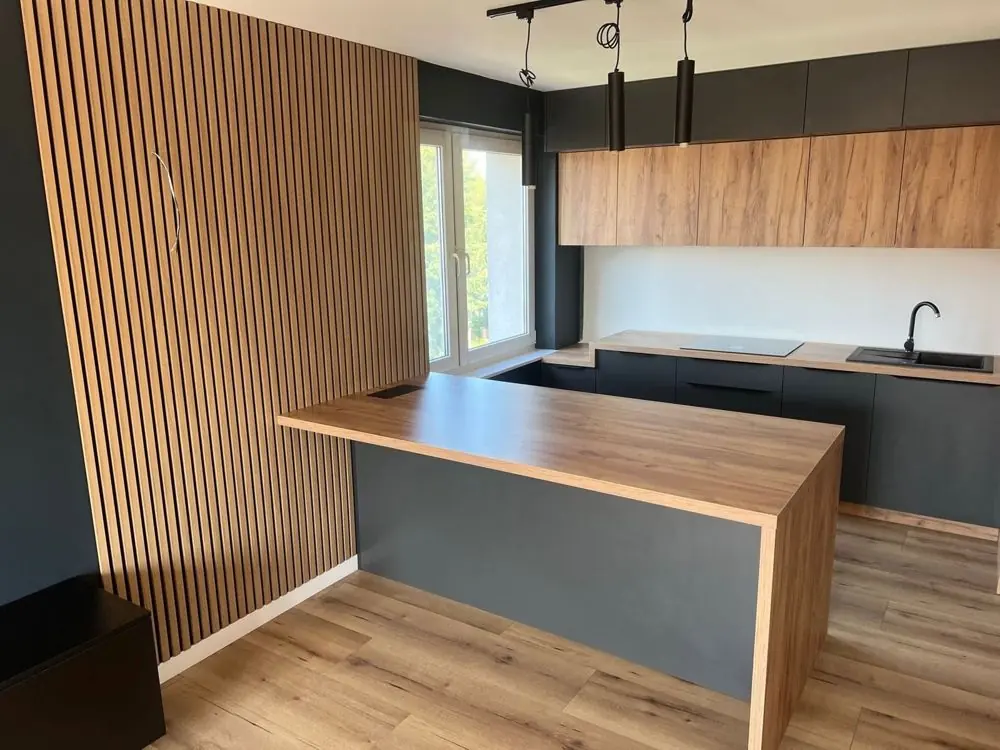
The most popular and most economical choice. Modern laminates have very realistic wood and stone decors as well as plain colours in matt or textured finishes.
- Pros: resistant to scratches and everyday use, easy to clean, affordable, a wide choice of decors.
- Watch out for: edges are finished with edging tape, so precise edge banding matters; very unusual shapes are harder to achieve.
Lacquered MDF
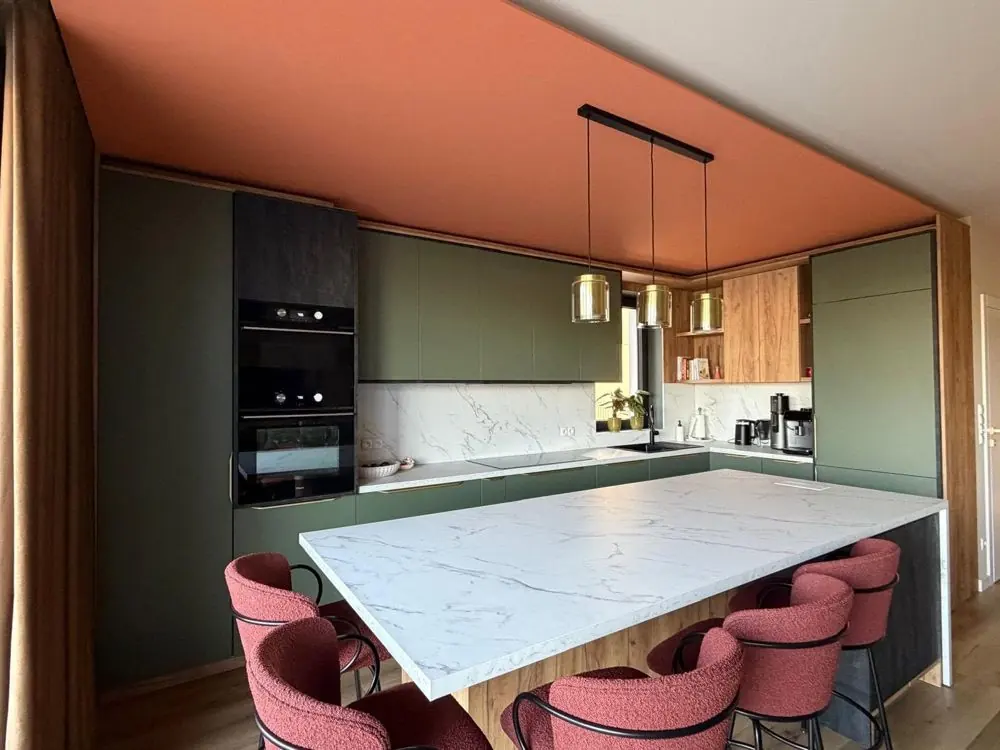
MDF fronts painted in several layers. They allow any colour, high gloss or deep matt, as well as milled details – for example classic frames or vertical fluting.
- Pros: any colour and shape, a smooth surface without visible edges, an elegant effect.
- Watch out for: gloss shows fingerprints and fine scratches; matt needs gentle cleaning products. Lacquer is sensitive to knocks and long exposure to steam – which is why we never put a kettle under wall cabinets.
Veneer
A thin layer of real wood on a stable board. It gives the look and texture of natural wood with the stability of a board.
- Pros: a natural, warm look, every front is unique, the wood grain can be matched across the whole kitchen.
- Watch out for: wood changes shade in light; natural differences in colour are a feature of the material, not a defect.
Solid wood
The most traditional choice – great for classic and rustic kitchens, but also for modern accents such as a worktop or island fronts.
- Pros: durability, can be renovated, a unique character.
- Watch out for: wood moves with changes in humidity, so it needs stable room conditions and proper care.
How to choose: a quick guide
- Busy family kitchen: laminate or a durable matt lacquer.
- Modern kitchen in a specific colour: lacquered MDF.
- Warm, natural interior: veneer, or lacquer combined with wood (for example a veneered island).
- Classic kitchen: lacquered framed fronts or solid wood.
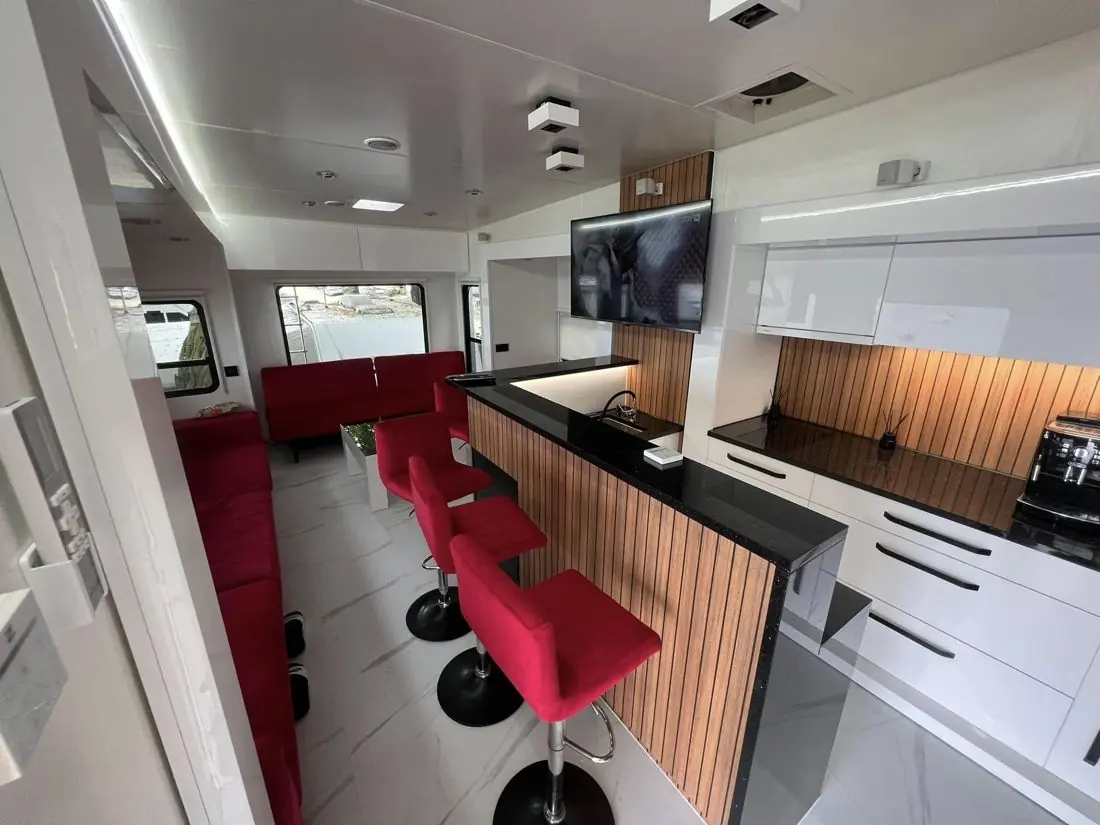
Combining materials works very well: base and tall units in lacquer or laminate, with the island or shelves in wood. See examples in our kitchen gallery and read our furniture care tips.